


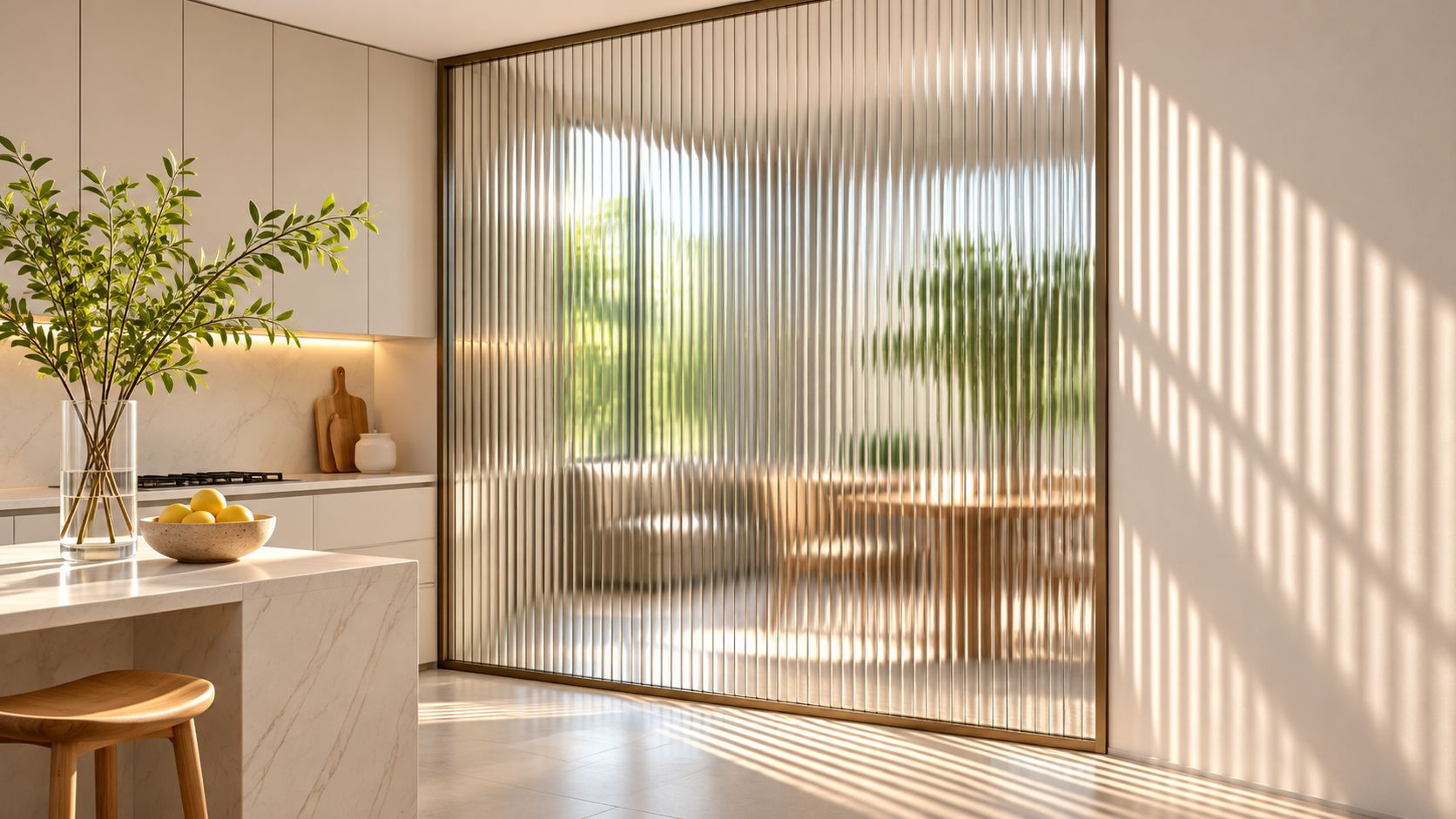
What Is Fluted Glass and How Ribs Change Light
Fluted glass is translucent glass with parallel raised ribs that pass daylight while smearing shapes so a room stays bright without a clear view through. If a kitchen pass-through shows every dish on the counter, or a bath window faces a neighbor's path, it can soften that view without turning the opening into a dark wall.
The important choice isn't whether the ribs look good in a sample photo. It's whether they hide the view you want hidden while keeping the light you want to borrow. Before choosing a frame or finish, distinguish patterned glass from film and decide how much of the view the opening needs to preserve.
Table of Contents
- What Fluted Glass Is and What It Is Not
- How Vertical Ribs Scatter Light and Sight
- Windows, Partitions and Doors That Suit It
- Styling Fluted Glass in a Real Room
- Glazing Stacks That Keep the Ribs Working
- How to Clean and Protect the Grooves
- Choose Fluted Glass for the Opening You Have
What Fluted Glass Is and What It Is Not
Fluted glass has parallel raised ribs formed in the glass surface, usually running vertically. It stays translucent: daylight crosses the pane, while faces, furniture and clutter lose their sharp outlines and break into bands. That makes it useful where clear glass reveals too much but a solid panel would block useful light.
The names on product listings can blur together. Use this comparison to sort the texture itself from look-alikes and applied film.
| Texture | How the surface is made | What you still see | Typical use |
|---|---|---|---|
| Fluted | Parallel raised ribs, often broader waves, rolled or cast | Shapes smear into bands; daylight stays strong | Partitions, doors, bath windows |
| Reeded | Finer, closer parallel lines, often the same family as fluted | Slightly more of the figure remains than with deep flutes | Cabinet doors, sidelights, interior doors |
| Ribbed | Everyday name for fluted or reeded parallel ribs | Same banded blur as the rib depth chosen | Any opening sold as ribbed glass |
| Rain | Irregular pebbled or wavy pattern, not straight channels | Soft blur without linear stripes | Showers, decorative lites, cabinet doors |
| Frosted or acid-etched | Even matte etch or sandblast across the face | Silhouettes only, little pattern | Privacy panels where texture should disappear |
| Reeded or fluted film | Adhesive pattern on clear glass | Looks ribbed until you are close; glass underneath stays clear | Rentals and retrofits on existing panes |
Fluted usually describes broader waves, while reeded often means finer, closer lines. Suppliers sometimes use both names for the same family of glass, so don't rely on the label alone. Check a physical sample for the rib width and depth that will affect the view.
Ribbed is an everyday description, not a separate texture. Rain glass has a less orderly surface, and frosted glass produces a more even blur. If you want straight vertical bands, those alternatives won't give you the same look or shadow pattern.
Film can imitate the lines on existing clear glass, which makes it a possible retrofit for a rental or a pane you don't plan to replace. But it doesn't change the glass's thickness, tempering or impact rating, and its edges can lift in wet areas. Treat it as a surface finish, not as a substitute for safety glazing.
Choose the privacy effect first, then decide what frame should hold the pane. A stylish frame can't make the wrong texture work for the opening.
How Vertical Ribs Scatter Light and Sight
Think of the ribs like a picket fence made of tiny lenses. Each one bends rays sideways, so light still enters the room but a clear view breaks into shifting bands. That's why fluted glass can keep a pass-through feeling bright without showing a sharp snapshot of everything behind it.
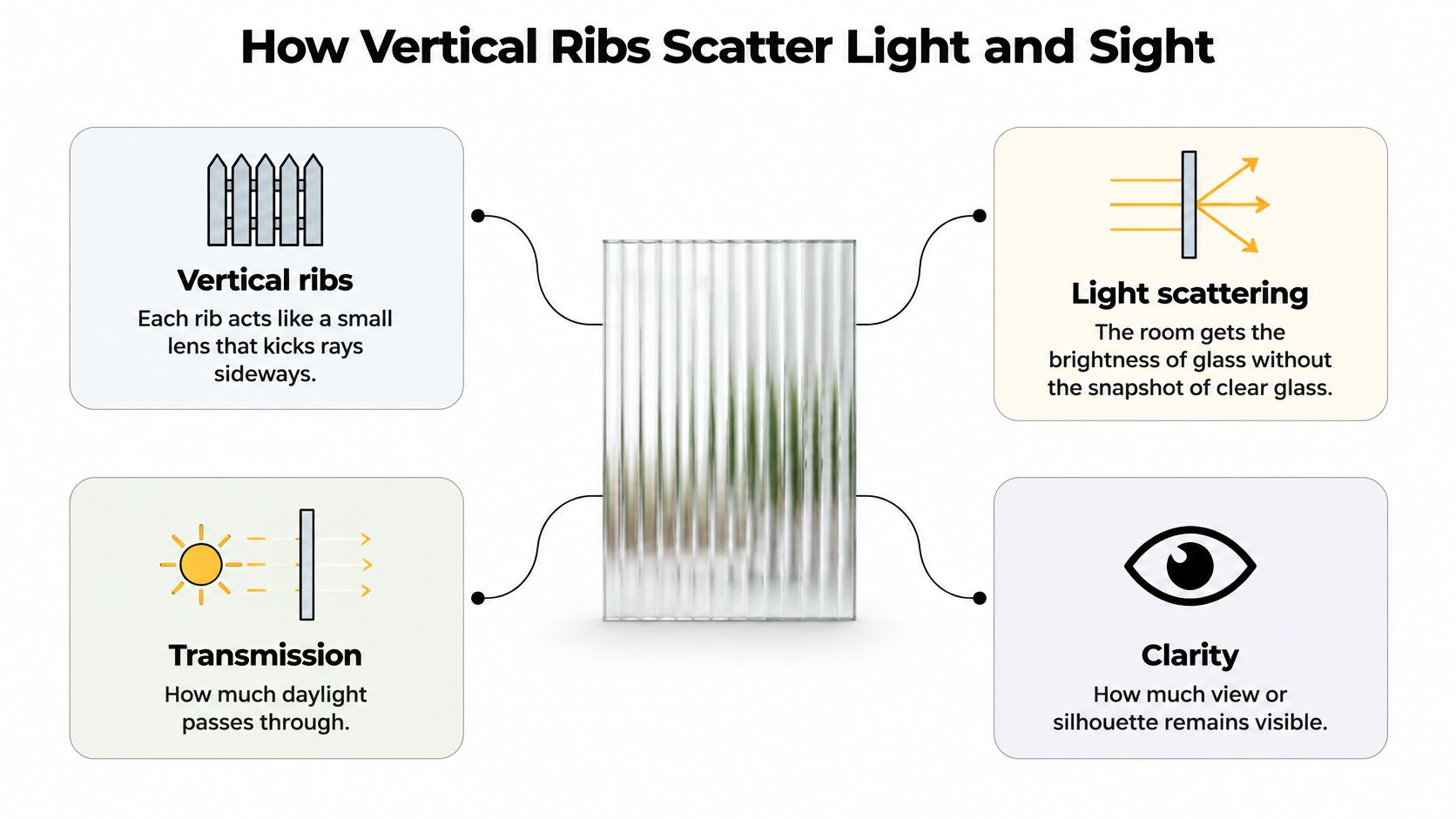
Transmission and clarity aren't the same thing. Transmission describes how much daylight passes through; clarity describes how much of the view remains recognizable. A clear or lightly tinted flute can pass plenty of light while making a person across the room look striped. A hand pressed close to the pane, by contrast, remains easy to recognize.
Direction changes the effect. Vertical ribs, the usual choice for doors and partitions, blur movement from side to side and break up long horizontal lines such as a counter edge. Horizontal ribs blur up and down, which can feel less natural when a standing person looks through the glass.
Rib depth and spacing matter, too. Fine, shallow reeds preserve more of the figure. Deeper, wider flutes hide more and make stronger shadow lines when light hits the surface at an angle. Most patterned panes have one textured face and one smoother face. Put the smooth side toward the room where hands will touch it often, so routine wiping is easier.
Practical rule: Judge a sample from the distance people will actually stand, not with your nose against the glass.
Daylight alone can give a misleading impression of privacy. At night, when the room is lit and the outside is dark, contrast may reveal more than you expected. Fluted glass softens a view, but it isn't blackout glass or a one-way mirror. Check the sample in daylight and again with the room lights on after dark.
For a comparison with another textured option, this guide to rain glass can help clarify whether an irregular pattern or straight ribs better suit the opening.
Windows, Partitions and Doors That Suit It
A kitchen pass-through wants borrowed light without putting dishes and counter clutter on display. A bathroom window facing a neighbor's path has the same problem: daylight matters, a sharp sightline doesn't. Fluted glass softens both views while the opening itself stays open.
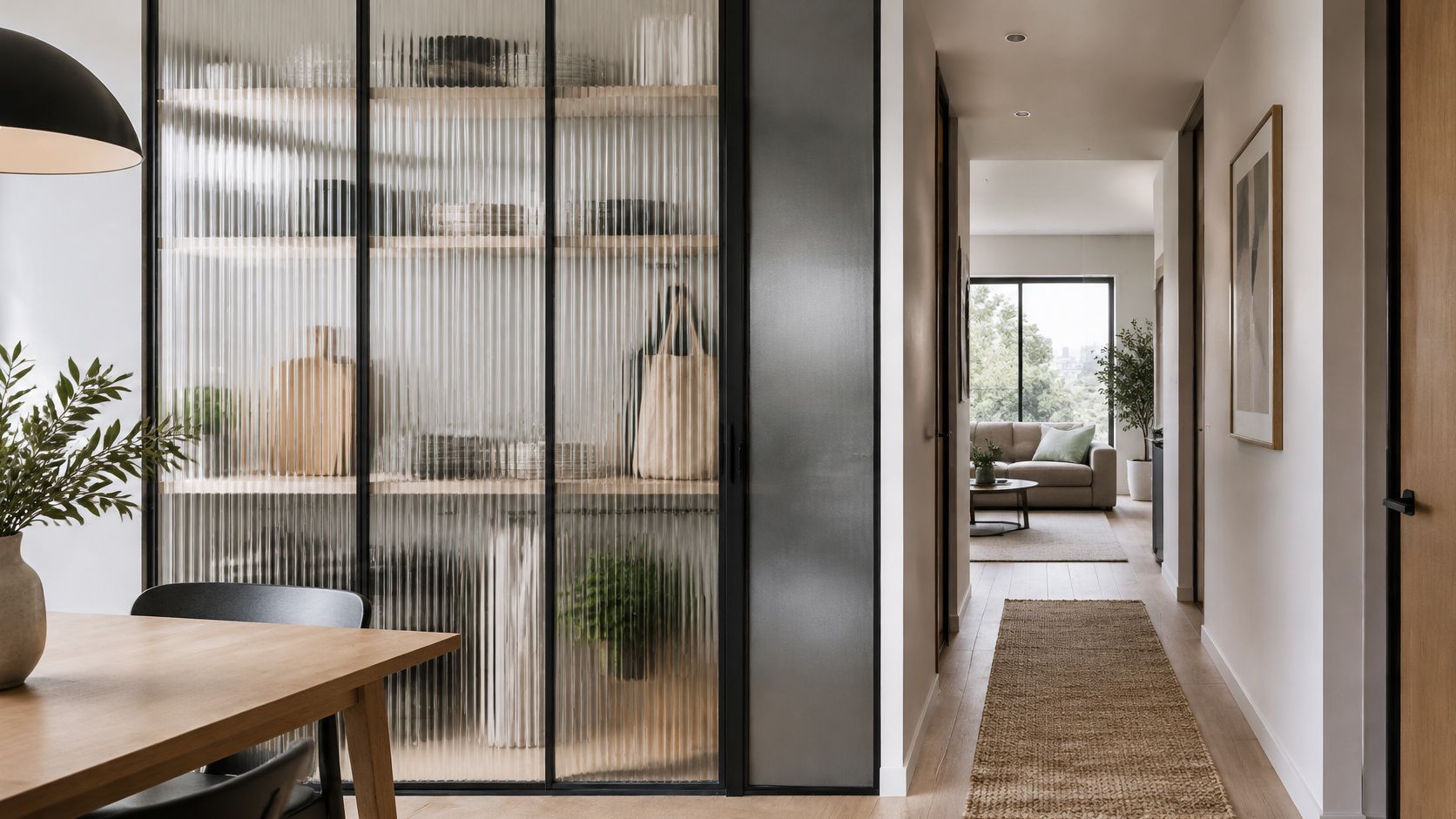
An interior partition between a kitchen and dining area, or a hallway and living room, can share light while keeping everyday mess in soft focus. A pantry, closet or wine-room door makes the same trade where a solid slab would close the corridor in. For layout ideas at larger scales, see these examples of glass wall dividers.
Bathrooms are a natural fit when the window or enclosure faces a toilet, doorway or neighboring property. For a shower, compare fluted glass with rain glass and keep cleaning access in mind, because grooves on the wet side collect soap residue faster than a flat pane. If you're planning a compact wet area, this overview of frameless screens for small bathrooms shows how much the enclosure itself changes the room.
A door doesn't need texture from edge to edge. A fluted sidelight or a single patterned lite can soften one sightline while the main view pane stays clear. Cabinet doors use the same idea at a smaller scale, where finer reeds sit better than a deep, wide flute.
Run one check before you order a frame: confirm the spec calls for textured glass rather than a ribbed film pressed onto a smooth pane. Film can suit a temporary partition or a rental, but on a door that gets handled and wiped daily, cast ribs formed in the glass itself hold their depth and don't peel at the edges.
Where the ribs get in the way
Some openings exist to show a view. Keep a picture window clear if it frames the outdoors. Skip ribs on a pane someone needs to read a screen through, or on a vision panel an exit requires. When the pane's job is an unobstructed view, texture works against it.
Scale changes the verdict too. A full-height partition can carry a strong pattern and read as architecture, while a single lite in a larger door works better as an accent. Judge rib width against the actual pane size rather than a close-up catalog crop.
A fixed panel accepts a deeper texture because nobody grabs it to move through the opening. On a door that gets pushed and pulled, mount hardware where fingers won't drag across the grooves with every use. Placement matters as much as the glass: a hinged door needs clear swing room, while a sliding panel suits a tight hall where a swing would clip furniture.
If the opening's job is the view, skip the ribs. If the job is borrowed light with a softened sightline, they're the right tool.
Styling Fluted Glass in a Real Room
Treat the ribs as one material among the room's existing colors and textures. Clear fluted glass keeps the look bright and graphic. Gray or bronze tint can cut glare and soften the view further, but it also makes the room darker. Dark reeded film can work as a graphic surface on interior cabinetry; it isn't a replacement for glass with the right safety rating.

The frame changes how the ribs read. A slim black steel stop makes them look like crisp drawn lines. Warm oak can soften those lines in a room that already uses wood. White framing with wide flutes can lean cottage; finer reeds tend to feel quieter against white.
Match the texture to the pane, not to the scale of the sample photograph. Broad flutes can hold their own on a tall partition, while fine reeds are usually easier to balance on a cabinet door or narrow sidelight. A door can also combine a clear lite and a fluted lite, keeping one zone for the view and another for privacy.
Keep the glass legible: Put pulls and locks on the smooth face, not across the textured field.
Lighting is part of the finish. A wall wash that skims across the ribs brings out their shadow after dark. A flat downlight in front of the pane can make the relief look less distinct. In a compact room, let the glass be the main pattern and keep nearby tile and curtains calmer.
If patterned tile is also on the design board, examples of Cherry Hill kitchen tile trends can help you think through how texture competes or coordinates across a kitchen.
Glazing Stacks That Keep the Ribs Working
Fluting describes the glass surface, not the window's insulating performance. The glazing stack has to handle safety and weather; the ribs handle the look and the softened view. Pick the assembly for the opening before settling on the exact texture.
| Assembly | Where it belongs | What the ribs do there | Main limit |
|---|---|---|---|
| Single tempered lite | Interior partitions, interior doors, cabinet doors | Full texture, easiest to see the rib depth | Little thermal control; not an exterior weather pane by itself |
| Laminated safety lite | Doors and panels that must stay together if broken | Pattern on one ply, privacy unchanged | Heavier, and the interlayer is not a design texture |
| Double pane with argon | Exterior windows and exterior doors in mixed climates | Pattern on one lite; daylight with a thermal stack | Ribs do not add insulation; frame must accept the unit |
| Triple pane | Extreme cold or a performance-driven exterior opening | Same privacy, more weight and thickness | Only worth it when the climate and frame both call for it |
| Pattern film on clear glass | Retrofit of an existing clear pane | Looks ribbed from a few feet away | Can peel at wet edges and does not change temper or impact rating |
For an interior partition or door, a single tempered lite may suit the job. A laminated lite is a different safety choice: it's intended for situations where the glass needs to remain held together in its frame if it breaks. The right choice depends on the opening and the applicable safety requirements, not on the rib pattern.
Exterior windows and doors need a weather-ready insulated unit. Double glazing with argon is a common approach for mixed climates; triple glazing may suit harsher conditions, provided the frame can accommodate the extra thickness and weight. Argon slows heat transfer compared with ordinary air, but fluted ribs don't add insulation worth counting on.
Keep the pattern visible
In an insulated unit, place the patterned surface where it remains visible rather than hidden between panes. Think about how divider bars will interact with the ribs, too. Simulated or true muntins can chop a strong flute into busy squares; they work best when the grid is wide enough to preserve the pattern, or when a divided look is itself the intent.
Film can be useful when clear glass is already installed and the pane doesn't need a new safety or impact rating. It won't turn ordinary glass into tempered, laminated or impact-rated glass. For a broader look at frame and glazing choices, see these glass options for windows.
Set the decisions in this order: safety and climate first, rib scale next, then real patterned glass or film. That avoids choosing a finish the glass or frame can't support.
How to Clean and Protect the Grooves
The valleys between ribs collect dust, while a cloth can skim over the peaks without cleaning those recesses. Work along the grooves so the cloth or brush reaches the dirt rather than pushing it into a line.
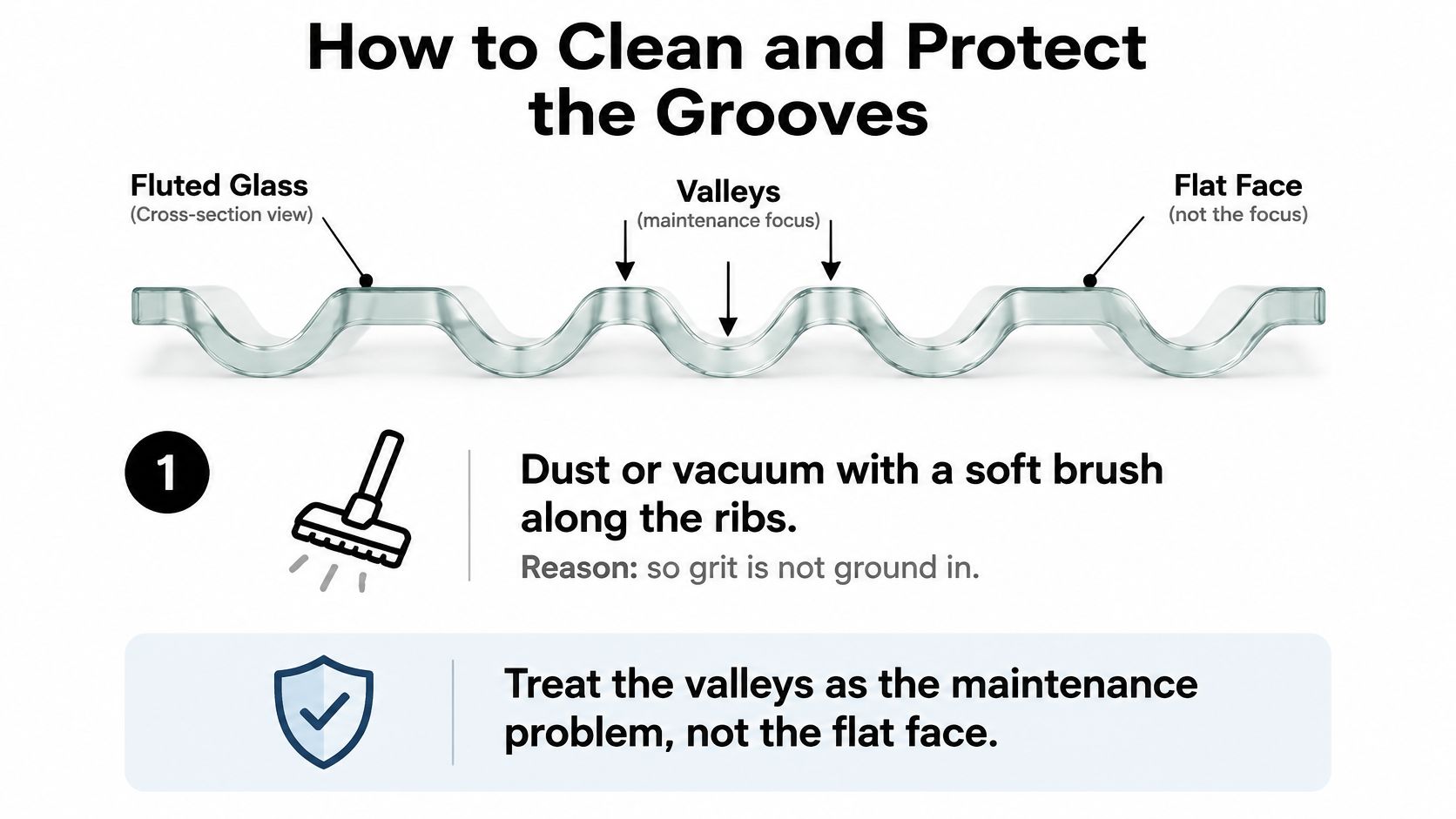
- Dust or vacuum with a soft brush along the ribs. Lift loose grit first so it doesn't get ground against the glass during washing.
- Apply mild cleaner to a cloth. Mix a drop of dish soap into water or use standard glass cleaner. Wet the cloth, not the frame, to keep liquid from pooling around seals and finishes.
- Wipe with the ribs. Follow the grooves so the cloth reaches the valleys instead of skating across the raised peaks.
- Remove soap with a clean damp cloth. A rinse wipe prevents residue from drying in the pattern.
- Dry with microfiber along the flutes. Drying the grooves helps prevent mineral marks from forming as the water evaporates.
Skip razor blades, scouring powders and stiff green pads. They can scratch or dull the surface. On adhesive film, avoid ammonia-heavy cleaners and vinegar soaks, which can cloud the finish or loosen the adhesive. Soap and water is enough for routine cleaning.
For hard-water spots on uncoated real glass, a brief wipe with diluted white vinegar followed by a full rinse and dry can help. Keep vinegar off stone sills and metal finishes. If mineral deposits are a recurring shower problem, this guide to how to descale shower glass safely offers more on removing them without rough scrubbing.
Once a year, inspect the exterior unit's gaskets and weep holes as well as the pane. A failed seal can fog an insulated unit from inside; surface cleaning won't fix that. The glass is clean when the peaks look bright, the valleys have no gray dust lines, and the frame finish is untouched.
Choose Fluted Glass for the Opening You Have
Choose fluted or reeded glass when an opening needs to admit daylight but a sharp view of a person, clutter or a neighboring path is the problem. Skip it when the pane's main job is to frame outdoor scenery, let someone read a screen or provide a required clear vision panel.
Use this specification pass before ordering:
- Mark the location. Decide whether the unit is interior or exterior; that changes the glazing and frame requirements.
- Mark how it operates. Note whether it's fixed or a door people push. Put the smooth face on the side people handle.
- Set the viewing distance. Consider how close a passerby or room occupant will stand. Closer sightlines usually call for finer reeds; a deeper, wider flute softens more of the figure.
- Name the safety need. Consider a single tempered lite for an interior opening, laminated glass where the lite needs to stay together in its frame if broken, and an insulated unit for an exterior window or door. Reserve triple glazing for openings where climate and frame capacity justify it.
- Choose glass or film. Use real patterned glass when the pane is new or needs a particular safety or impact rating. Use film only when clear glass is already installed and the existing glass meets the opening's requirements.
- Set the frame and check a sample. Keep stops slim if you want the ribs visible, and avoid a heavy grid that chops up the pattern. Judge the sample in daylight and with the lights on at night.
For a new opening, you can choose any tempered glass style, from fluted ribbed to rain glass and a range of frosted designs, paired with your preferred frame color.
Black Badge Doors offers made-to-order steel and aluminum windows and doors, along with glass partitions and a choice of glass styles for different openings. If you're planning a project where daylight, privacy and slim sightlines all matter, explore the options at Black Badge Doors.
Read more
Steel Windows and Doors: How to Specify Them
A kitchen renovation can leave you with a generous opening and a disappointing view. The new glass spans the wall, but a thick frame and jamb turn the scenery into a picture with a heavy...
Read more
Artistic Windows and Doors Design Guide
The stair hall is finished, the plaster is smooth, and the view through the opening is exactly what the renovation was meant to frame. But a plain white stock window still looks like a placeholder....
Read more