


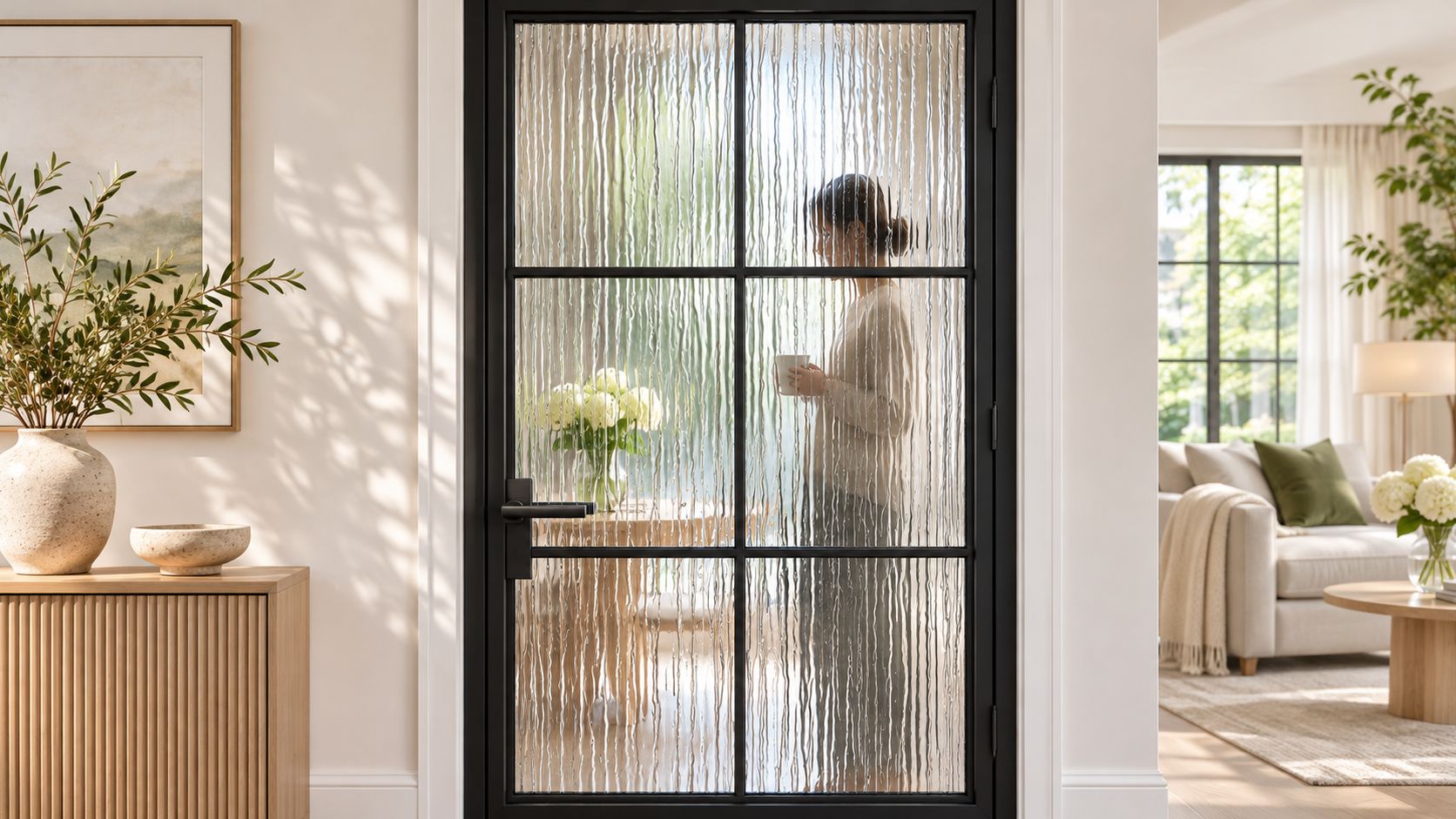
What Is Rain Glass and How It Creates Privacy
Rain Glass Is Patterned, Textured Glass That Looks Like Rain Running Down A Pane. It lets the light in while breaking up the view, so doors and windows get privacy without turning solid and heavy.
Table of Contents
- What Is Rain Glass In Plain Terms
- How the Rain Pattern Changes Light and Privacy
- Rain Glass Compared With Other Patterned Glass
- Where Rain Glass Works in Doors and Windows
- Benefits And Tradeoffs Of Rain Glass
- How To Specify Rain Glass For A Custom Project
- FAQ
What Is Rain Glass In Plain Terms
Think of looking through a wet windshield when you're parked. You can still pick up daylight, movement, and color, but all the sharp edges are gone. That's what rain glass does, just with a permanent texture instead of real water.
That difference is where translucency versus transparency comes in. Transparent glass gives you a clear look straight through. Translucent glass lets light pass while obscuring what's on the other side.
- Light still comes through, so a glazed opening doesn't have to turn into a dark wall.
- Details get softened, people and objects may show up as blurred shapes rather than anything distinct.
- The pattern stays part of the look, so it's decorative, not just a way to hide the view.
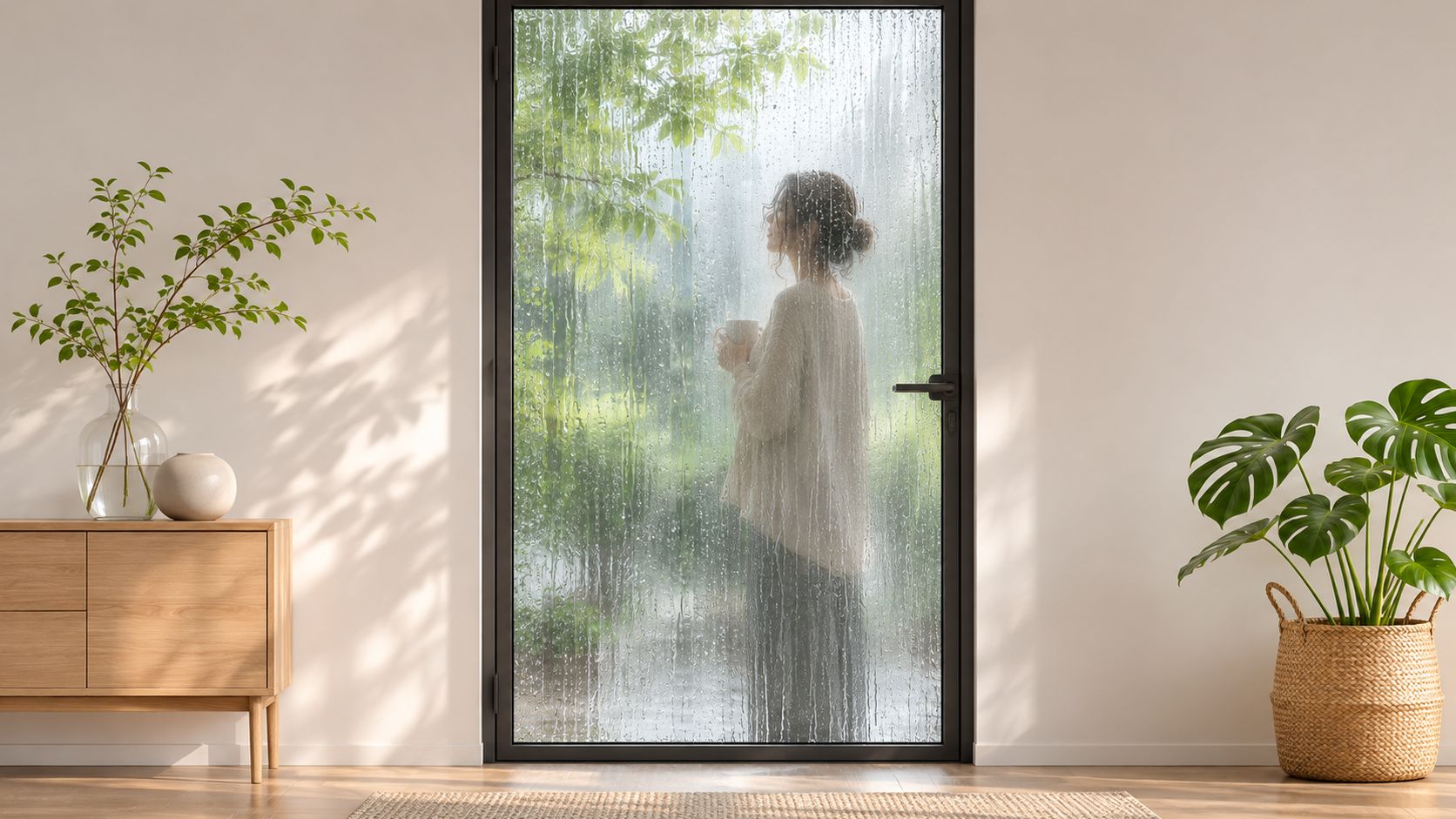
From a normal standing distance, you generally see hazy outlines instead of crisp facial features. Picture someone at your front entry door. You can tell they're there, you just can't read their expression.
Recognize The Pattern Before Choosing Glass
Rain glass isn't just a frosted coating. Its signature is that visible, irregular texture like water trails. Frosted designs tend to look more even and misty by comparison.
For broader context on architectural glass applications, see FenceScape glass fencing installations. Just remember to separate the decorative effect from how the full door or window is built.
Rain Glass At A Glance
Here's a fast way to size it up before you spec it — what it looks like, what it does with light, and where it tends to work best.
| Pattern Look | Light | Privacy | Typical Places |
|---|---|---|---|
| Irregular, rainlike texture | Admits daylight | Softens shapes and obscures detail | Entry doors, bathroom windows, interior partitions |
In short, the table tells the whole story. You get daylight, softened privacy, and a spot that suits doors and partitions where you want separation without darkness.
The pattern itself is a glass design choice, not a substitute for the frame or glazing unit. At Black Badge Doors, customers can pick tempered styles from fluted or ribbed glass to rain glass and frosted designs, matched to their preferred frame color. Explore the available custom glass and frame options.
Before you order, ask for a physical sample and check it in your own room light. Look at it from both sides, especially from where someone would normally stand near the opening.
Have your supplier confirm the exact pattern, frame finish, and glazing construction before you sign off on the door or window order.
Rain glass preserves light while softening the view through a permanent rainlike texture.
Rain glass changes the view, not just the look of the window. The texture bends and scatters light, so privacy shifts with distance, lighting, and where a person happens to stand.
How the Rain Pattern Changes Light and Privacy
Think of it like ripples breaking up a reflection in a pool. The raised, uneven surface cuts off a straight sightline. Daylight still comes through, but what’s on the other side looks fragmented instead of sharp.
A clear pane is almost like leaving the window open. Rain glass acts more like a glowing screen. It lets brightness in while scrambling the details that make faces and objects easy to recognize.
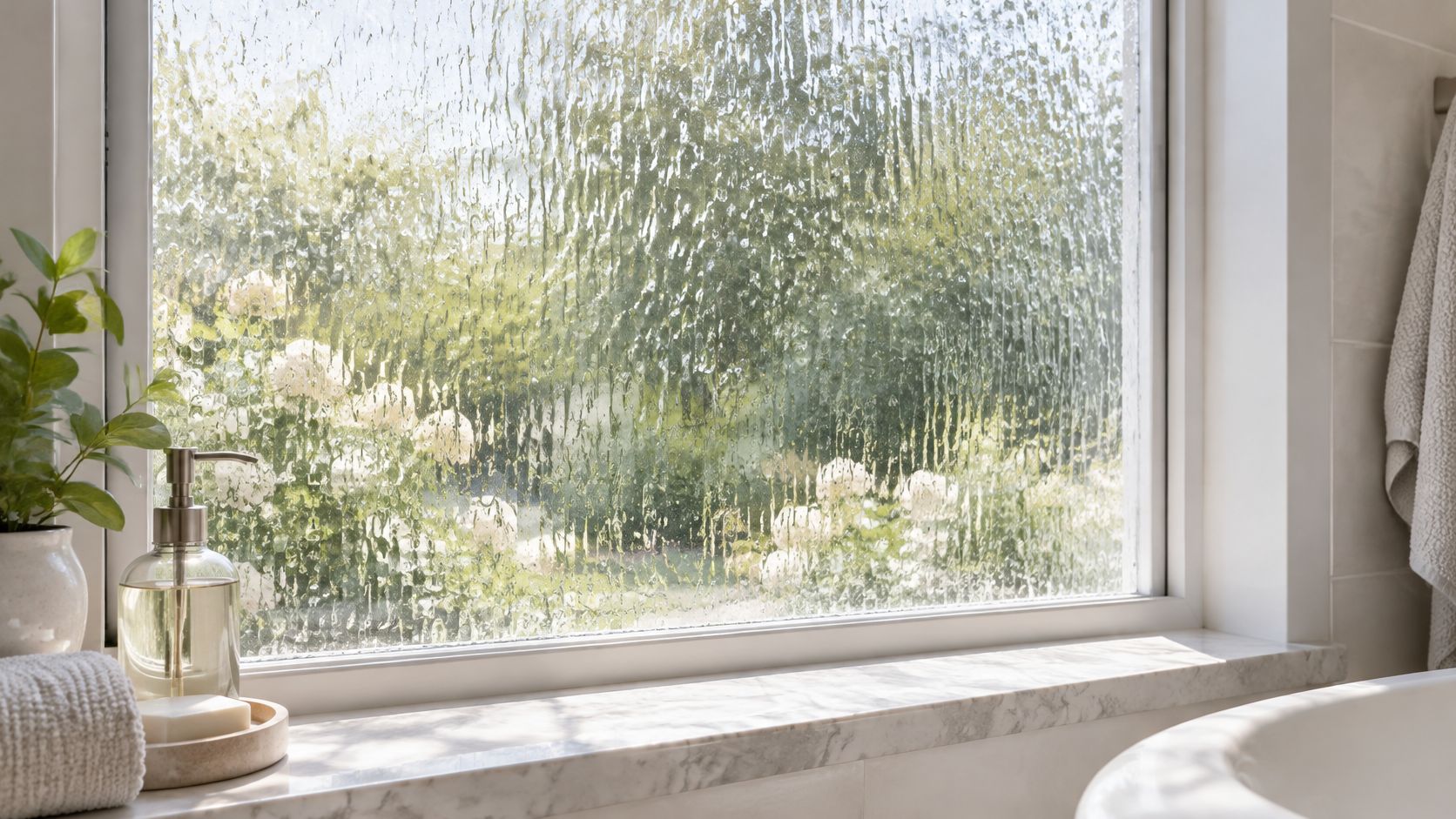
- Close to the glass, a hand or figure can still read clearly, especially when pressed near the other side.
- Further back, fine detail usually drops away, though movement and broad shapes may still show through.
That’s why “what is rain glass” takes more than a pattern description to answer. Privacy is a matter of degree, not a promise that everything behind the glass vanishes.
Check Distance and Lighting Together
Someone standing right behind an entry door can throw an obvious silhouette, even if you can’t make out their face. Step farther down the hallway and that same figure softens, depending on the pattern and the light.
Brightness tilts the outcome, too. A lit interior seen from a dark porch tends to reveal shapes far more than that same room viewed from outside in daylight.
- Test in daylight from the real sidewalk, landing, or neighbor’s sightline.
- Check again at night with the interior lights on.
- Have someone move behind the sample to compare close outlines against distant movement.
So a bathroom window set above eye level often feels more private than an entry sidelight next to a busy sidewalk. It’s about angle and access, not always a different glass pattern.
For care guidance, check the art glass advice from Professional Window Cleaning before you pick a cleaning method for decorative glazing.
Separate Visual Privacy From Thermal Comfort
The pattern handles the view; the insulated unit handles comfort.
In an insulated unit, argon gas fills the space between panes because it transfers less heat than regular air and is nontoxic. That fill deals with heat loss, not with how clearly someone sees through the texture.
Before you order, ask your supplier to show the actual rain pattern under your entry or bathroom lighting. Get a sample and look at it from both sides before you sign off on the glass.
Rain Glass Compared With Other Patterned Glass
Picking privacy glass is less about the sample photo and more about what you can still see through it. Rain, fluted, and frosted glass all blur the view, just in very different ways. Start with the sightline in the actual room.
Fluted or ribbed glass is all straight lines. The parallel ribs stretch everything behind them, so a figure turns into long, repeated strips.
Think of looking down a row of narrow vertical channels. The outline is still there, it is just pulled and broken up.
Rain glass is far less orderly. Its scattered, water-like texture breaks shapes into fragments instead of stripes. Frosted glass goes quieter still, like an even veil with almost no pattern fighting your tile or cabinetry.
Pick the pattern for its personality first, then make sure the privacy actually works for that opening.
Ribs can be a great echo for vertical cabinet work around a kitchen partition. Rain texture feels right in an entry where you want something decorative and irregular, while frosting tends to disappear in a bathroom.
Compare Pattern, Light, and Visibility
When you are wondering what rain glass really is, side-by-side samples tell the story fast. Think of these as visual tendencies, not formal privacy ratings.
Rain Glass Versus Fluted and Frosted Glass
Here is how the three most common choices stack up on pattern, view, and feel:
| Glass Style | Pattern | View Through | Privacy Feel | Best Fit |
|---|---|---|---|---|
| Rain | Irregular waterlike texture | Fragmented shapes | Broken detail | Entries, bathrooms |
| Fluted | Parallel directional ribs | Stretched, repeated outlines | Directional distortion | Partitions, kitchens |
| Frosted | Even veil | Soft silhouettes | More uniform obscuring | Bathrooms, private offices |
Rain and ribbed surfaces play with the light, so you see real movement across them. Frosting gives a smoother, more even glow. Do not assume they will feel equally bright until you compare them in person.
- Check direction, and note whether those ribs run vertical or horizontal.
- Compare figures, by having someone stand behind each sample.
- Judge light, against the same background instead of separate showroom walls.
For a closer look at directional texture, explore the guide to ribbed glass doors. Keep the frame finish and sample size the same so glass is the only thing you are judging.
Keep Glass Construction Separate
A slim steel or aluminum frame can carry any of these looks, depending on the system specified. You are choosing the glass face, not switching door families.
Metal glass doors have slim black frames and are available with double pane or triple glazed tempered glass or laminated glass. Review the custom door options at Black Badge Doors.
- Confirm the desired texture.
- Specify safety glazing separately.
- Confirm insulated construction where needed.
No decorative texture replaces tempered, laminated, or insulated construction. Always request matching samples for your own opening. More pattern usually means more privacy and a bolder statement, but less of a true outdoor view.
Rain glass makes sense where daylight matters more than a clear view. Start by thinking about the opening from the other side — especially if a sidewalk, a neighbor's window, or a shared hallway looks straight at it.
Where Rain Glass Works in Doors and Windows
Entry and French doors are a good place to start. Rain glass breaks up the view into a hallway or living room, but still lets the entry feel connected to outside light.
Take a narrow house with a front door facing the neighbor's porch. Swap clear door glazing for rain glass, and that direct sightline softens. No curtain needed across the opening.
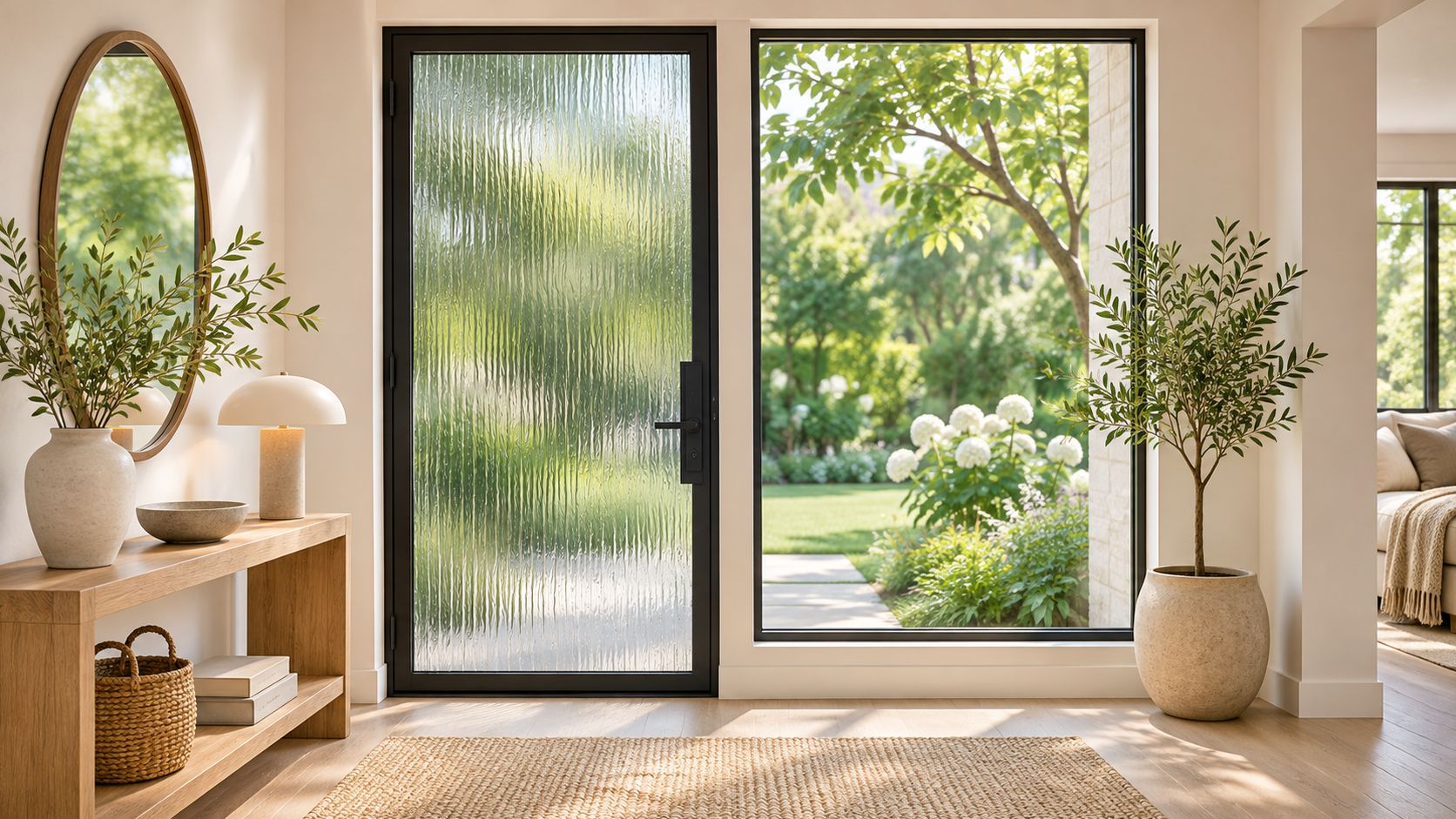
- Street-facing bathrooms work well with textured glazing when an open outdoor view isn't the point.
- Bedroom windows near other homes can pull in daylight without putting furniture and daily routines on display.
- Garden-facing view walls are usually better in clear glass when the scenery is why you bought the spot.
Put rain glass across an unwanted sightline, not across a view you bought the house to enjoy.
Match Rain Glass to the Opening
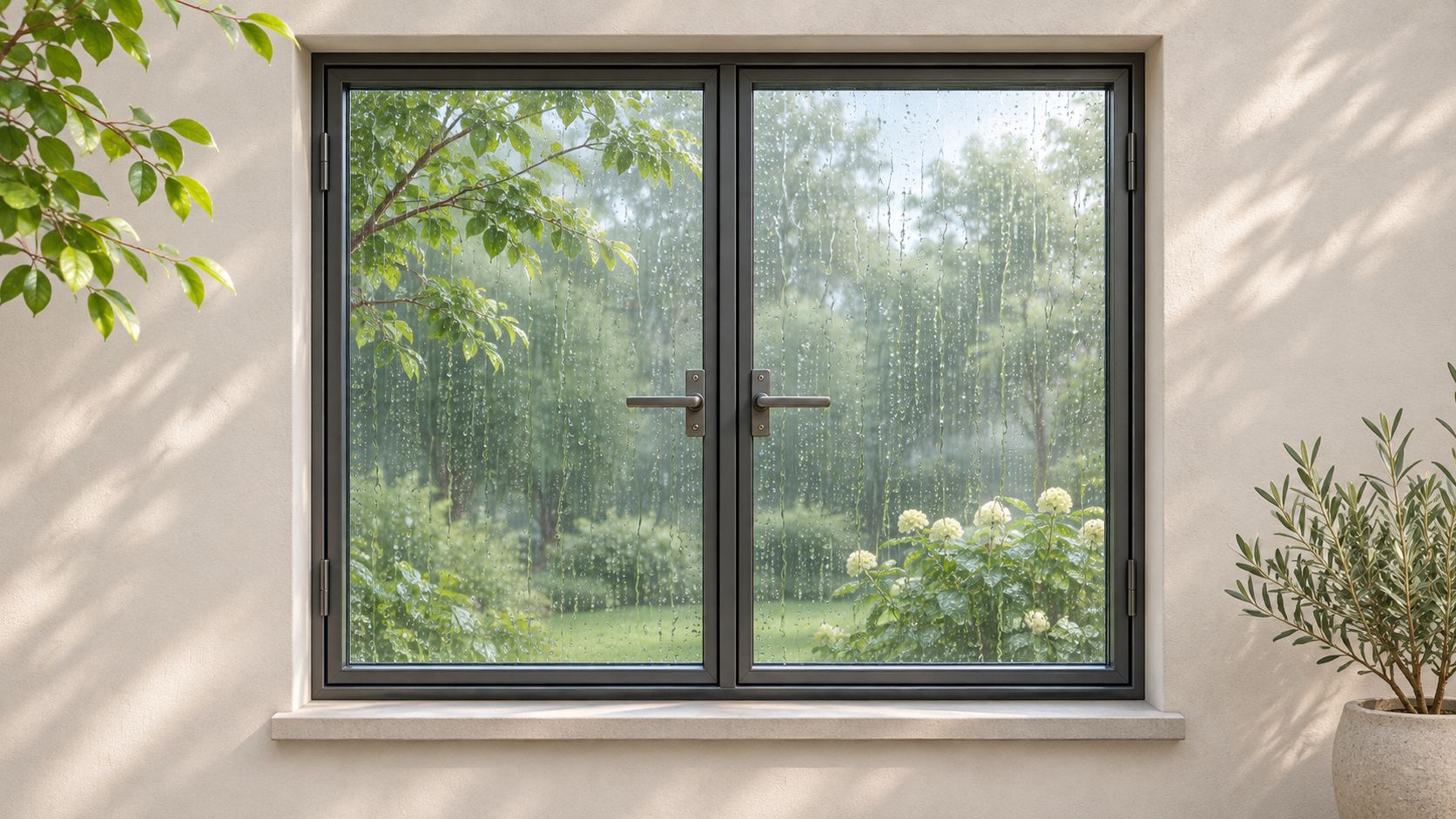
The same texture fits picture, casement, and awning windows. A picture window is fixed, while casement and awning units open — so pick operation based on access and airflow, not the pattern.
Swing, sliding, bifold, and pivot doors work the same way. They describe how the unit moves. They aren't different types of rain texture.
| Opening | Practical Placement |
|---|---|
| Fixed picture window | Stair landing facing neighbors |
| Casement window | Bedroom needing an opening sash |
| Awning window | Bathroom needing an operable unit |
Black Badge Doors’ product range includes custom specialty steel glass doors and windows with sleek thin frames, arch tops, and fully custom solid steel thermal break frames. Explore the custom steel door and window range.
For help coordinating the frame with the opening, read the guide to metal doors with glass.
Divide Interiors Without Closing Them Off
Interior steel or aluminum partitions are another practical use. Picture a hotel lobby with a small consultation area next to reception, where rain glass softens views of seated guests while light still passes between spaces.
A retail front might do the same thing — textured side panels around a clear entry, screening a waiting area without hiding the doorway.
- Mark the sightlines you want to interrupt.
- Identify views worth preserving.
- Request a sample before approving glazing.
Send your opening dimensions and sightline photos to Black Badge Doors to discuss rain glass placement.
Rain glass makes sense if you're happy to give up a crisp view in exchange for real privacy.
Benefits And Tradeoffs Of Rain Glass
The day-to-day win is simple: daylight without a heavy curtain. In a street-facing room, that means you can leave the glass uncovered instead of fiddling with blinds all day.
There's a look to it, too. The uneven texture softens incoming light and adds some character next to slim black frames, and Black Badge Doors’ glass and finish options make it easy to pair rain glass with the frame color you already like.
- Pick privacy over scenery where close neighbors or foot traffic make you uneasy.
- Stick with clear glass for views worth keeping, like a garden or courtyard.
- Think about cleaning access since water spots tend to show on the patterned side if splashes sit too long.
But it isn't a blackout screen. Under strong backlight, a silhouette can still read through the glass. So a bathroom that feels private at noon may need a shade or liner after dark.
Rain glass blurs the view; it doesn't promise total concealment in every light.
That difference is worth settling before you order, especially if this glass is meant to replace a curtain outright rather than just help it out.
Check Performance Before Ordering Rain Glass
The rain pattern on its own doesn't add an impact rating, thermal break, or extra insulation. Those come from the frame, the glazing build, and the tested assembly — not the texture.
As one example, available glazing and frame configurations cover double or triple glazing plus thermal break options. Treat those as separate choices from the pattern itself, and ask for paperwork on any performance rating you need.
- Which rooms face the street? Walk the actual sightlines that need covering.
- Which rooms deserve a view? Don't give up good scenery just to run one glass style through the whole house.
- Is privacy, pattern, or both the goal? Hold samples up to that test before you sign off.
Patterned glass is not automatically security glass. And rain texture is no stand-in for laminated glass where laminated is called for, so confirm the right safety glazing with your supplier and installer.
Have Black Badge Doors look over your opening sizes, privacy needs, and required glazing build before quoting. Use rain glass where that mix of light, texture, and screening actually fits the project, not because one glass type is best everywhere.
A good rain glass order keeps looks and build separate, so your builder knows exactly what glass, frame, and operation to price.
How To Specify Rain Glass For A Custom Project
Start with tempered glass as the safety baseline, then let your architect confirm what the opening actually requires for code. Think of laminated glass as its own construction choice for metal glass doors, not just another word for the rain texture.
Black Badge's double-pane glass uses two layers of tempered glass with argon between them, with triple glazing available for severe weather. You can compare the trade-offs in the guide to window glass options.
Put the rain pattern on one face of glass. List panes, gas fill, and frame build separately to handle heat transfer.
For cold and mixed climates, ask for a thermal break frame. On a northern job, it is also worth requesting a custom quote for a thermally broken fixed picture window, instead of assuming every fixed unit comes that way.
Coordinate Dividers And Operation
Handle the grid as its own decision, apart from the texture. Simulated divided lite, or SDL, gives you the divided look, while true divided lite, or TDL, breaks the opening into truly separate glazed sections. Have the supplier show the proposed divider layout right on the approval drawing.
- Pattern approval: Get a rain glass sample in hand and confirm which way it runs.
- Grid approval: Mark divider locations so they line up with nearby doors and windows.
Operation deserves the same clarity. As an example, call out a steel casement pushout window with thermal break and double-pane tempered glass, then name the rain texture as a separate line item.
- Record opening dimensions and which way the unit needs to operate.
- Confirm frame material, hardware, and access needs.
- Review the final drawing before you release it for fabrication.
Black Badge's metal glass doors are built in any size and style, not pulled from stock. Send your measured dimensions for review rather than assuming a standard size will work.
Complete Your Rain Glass Specification
Use this checklist to turn the design intent into something orderable:
| Specification | Detail to Confirm |
|---|---|
| Glass style | Rain pattern and orientation |
| Safety construction | Tempered or laminated |
| Pane count | Double or triple |
| Gas fill | Argon where specified |
| Dividers | SDL or TDL layout |
| Frame material | Steel or aluminum |
| Thermal break | Required or omitted |
| Finish color | Approved color and texture |
Send Black Badge Doors your finished checklist, opening measurements, and project location. Ask for a written quote plus approval drawings that confirm the exact glazing build before you place the custom order.
Choosing rain glass really comes down to three things: appearance, privacy, and construction. Get those four questions answered below and you can put “what is rain glass” straight onto a door or window schedule before you ask for a quote.
FAQ
Compare Rain Glass Appearance and Privacy
Is Rain Glass the Same as Frosted Glass?
No, not quite. Rain glass has a visible, waterlike texture you can actually see ripple across the surface, while frosted glass reads more like a soft, even veil.
Don't just write “privacy glass” on an order — that leaves too much open to interpretation. Spell out the exact style you want.
Both can be ordered as tempered glass with your choice of frame color. Just keep those as two separate selections, so approving a finish doesn’t accidentally count as approving the glass.
- For rain glass, ask for a sample that shows the irregular texture in person.
- For frosted glass, confirm the exact frosted design instead of assuming they all look the same.
Does Rain Glass Block All Visibility?
No. It blurs the detail, but if one side is much brighter you’ll still catch a person’s outline. Think of it as privacy glazing, not a blackout barrier.
Approve privacy under the lighting you’ll actually use, especially with interior lights on after dark.
Specify Rain Glass Construction and Dividers
Can Rain Glass Work in an Energy Efficient Steel or Aluminum Unit?
Yes, it can. That texture pairs just fine with insulated glazing and a thermally broken frame. Available window glass options include double panes of tempered glass with argon between them, plus triple glazing for extreme weather.
The texture itself doesn’t make the unit efficient, though. Always ask for specs on the full assembly, frame included.
- Confirm the pane count and gas fill.
- Request the required thermal break.
- Check the quoted assembly against your project’s performance needs.
Do Dividers Change the Rain Pattern?
No. Simulated or true divided lites just organize the opening, visually or physically — rain texture is a completely separate glass choice. Specify both, then check how they sit together on the approval drawing before anything gets built.
Have Black Badge Doors look over your dimensions, glazing preferences, and divider layout. Request a custom project consultation before you lock in that final door or window spec.
Read more
Impact Rated French Doors: What the Label Means
A remodel can look settled on paper until the wind engineer asks for the door's approval number. The drawing shows a handsome pair of glass doors; the submittal has to show that the exact assembly...
Read more
Steel Awning Window Specs Architects Need
A kitchen window can be the only practical place to vent cooking heat, but a casement may swing into the faucet, a counter, or the person working at the sink. A fixed pane keeps the...
Read more