


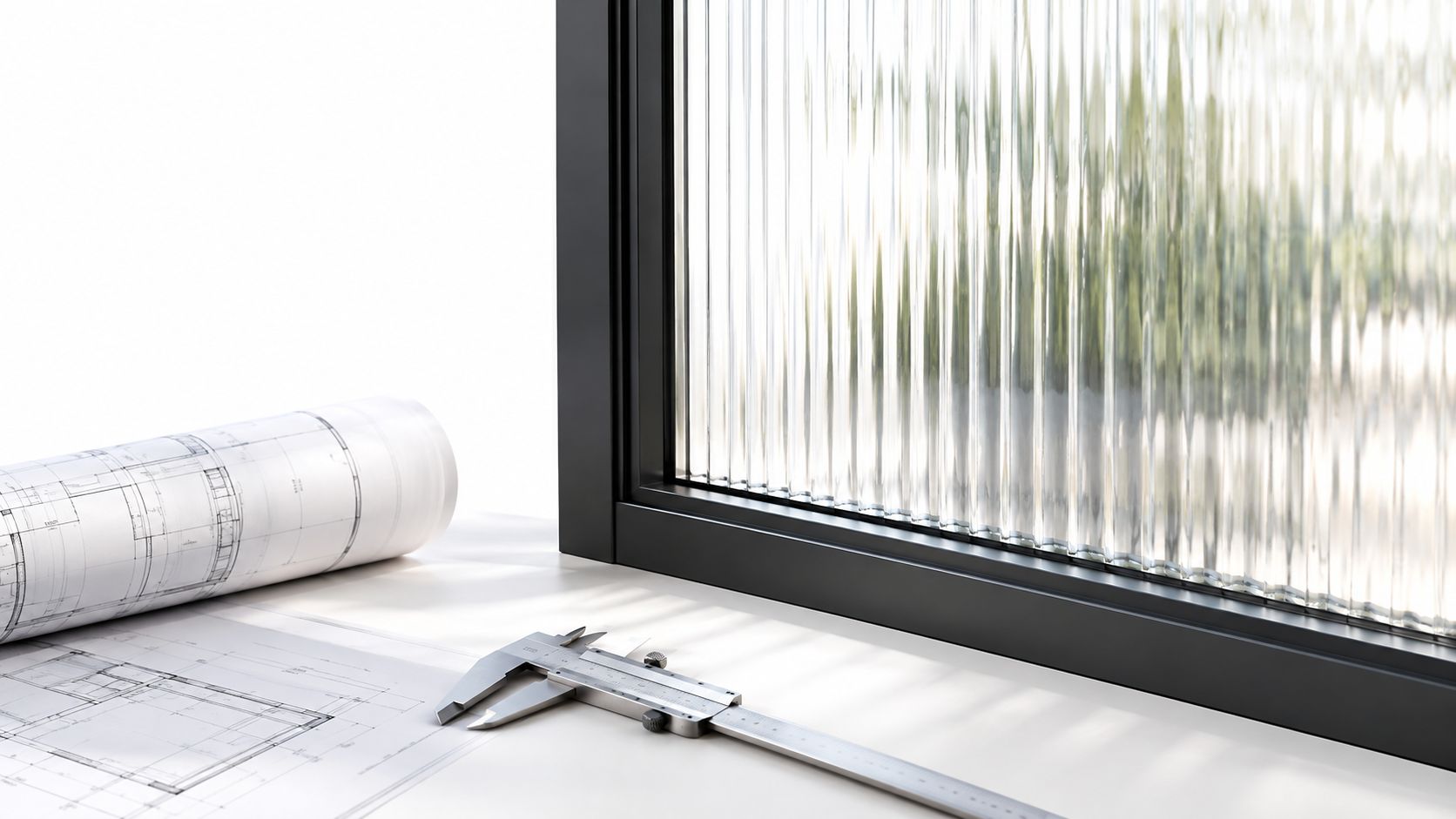
Rain Glass Windows: A Practical Design and Spec Guide
You're standing in a foyer at dusk, looking at a clear sidelight beside the front door. You want the daylight it brings in the morning, but you don't want the sidewalk to have a clear view in at night. That tension is where most conversations about rain glass windows start, and it's also where the shorthand answer, it gives you privacy, starts to break down.
Table of Contents
- Why Rain Glass Windows Deserve a Closer Look
- How Rain Glass Is Made and What That Means for the Spec Sheet
- The Privacy and Daylight Trade-Off Explained Honestly
- Rain Glass Compared to Frosted, Fluted, and Laminated Privacy Options
- Glazing, Safety, and Energy Options for Rain Glass
- Pairing Rain Glass With Slim Steel and Aluminum Window Systems
- Cleaning Rain Glass Without Damaging the Texture or the Frame
- A Short Spec Checklist Before You Order Rain Glass Windows
Why Rain Glass Windows Deserve a Closer Look
A bathroom window facing a side yard presents the same problem in miniature. Clear glass feels exposed, a shade kills the light you need in a small room, and a heavy obscure pane can make the space feel closed in. Rain glass sits in the middle, which is exactly why it needs a closer look rather than a yes or no.
Rain glass isn't a privacy rating. It's a textured, rolled-pattern product, and products sold under that name vary in pattern depth and how strongly they scatter light. Two samples that look similar on a showroom wall can perform differently once they're glazed into a tall sidelight, a street-facing bath window, or an interior partition.
The variables that actually decide performance
Four factors matter more than the product name. Orientation determines which face, textured or smooth, sits where. Lighting direction determines whether the brighter side faces the observer. Viewing distance determines whether a blurred shape reads as private enough. Glazing build-up determines whether that lite is a single pane or part of an insulated unit.
- Entry sidelights: Close viewing distance from the porch, strong contrast at night when the hall light is on.
- Bathroom windows: Short distance inside, backlighting from a mirror light, humidity on the room side.
- Interior partitions: Balanced light on both sides, so silhouettes behave differently than they do at an exterior wall.
- Street-facing windows: Greater distance helps obscuration, but headlights and low sun change the picture.
Treat rain glass as one component in a complete window or partition system. Sash size, sightlines, mullions, and whether the unit opens all affect how much textured area you get and how the light lands. Specify the glass in isolation and you'll often be surprised by the installed result, usually at night, when it's too late to change without reordering a lite.
How Rain Glass Is Made and What That Means for the Spec Sheet
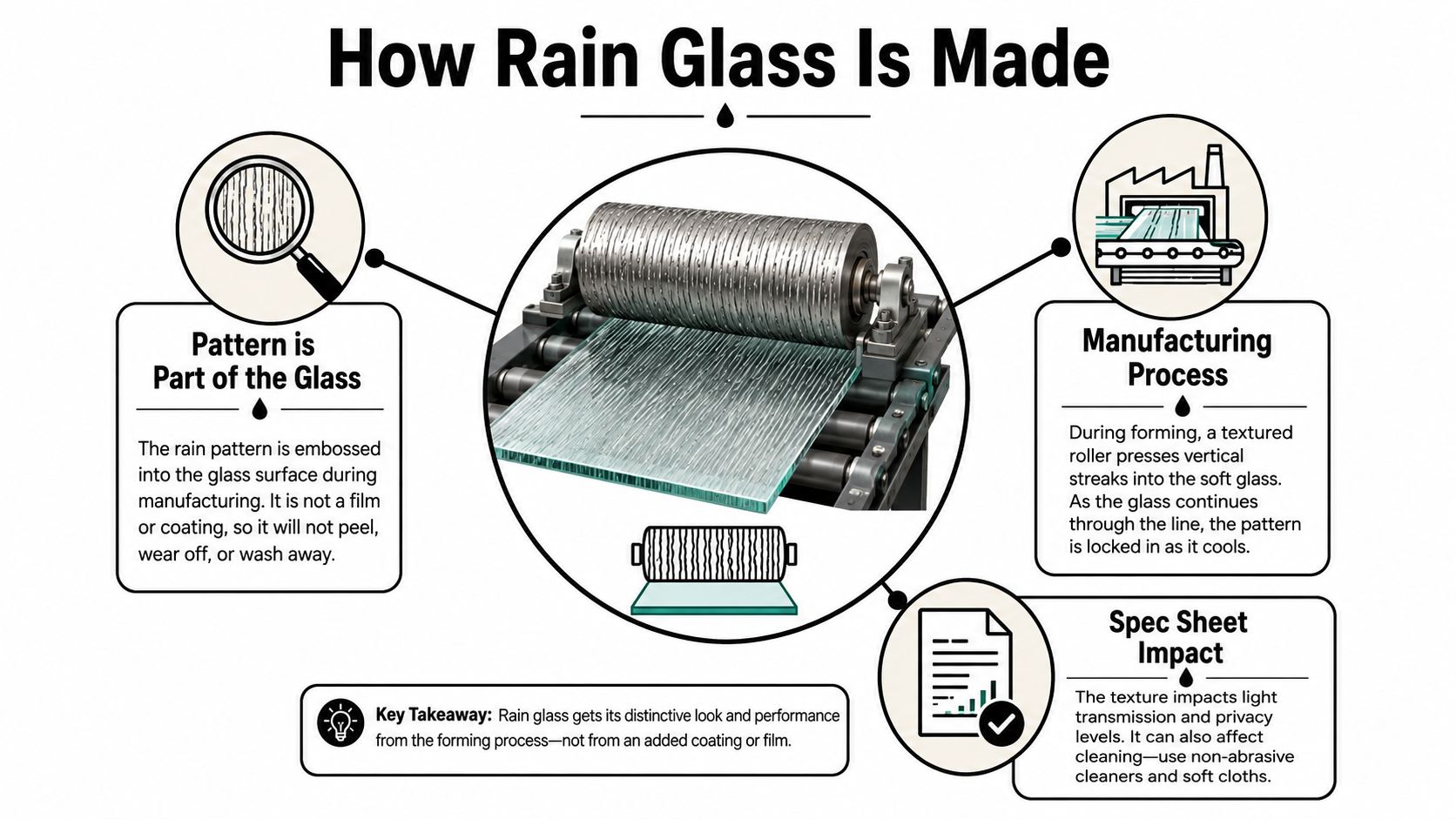
Rain glass is made while the glass is still soft. A continuous ribbon passes between textured metal rollers, and the roller presses vertical streaks or irregular lines into one surface, a process described in Ritchie Studio's history of glass manufacturing methods. The pattern is formed into the sheet, not applied to it afterward.
Think of embossing versus painting. Paint sits on a surface and can wear, peel, or be scratched off. An embossed pattern is the surface. That's the practical difference between rolled rain glass and acid-etched or sandblasted glass, where the effect comes from treating a pane that was already formed.
What the forming method means on site
Every sheet has two different faces. The textured face scatters incoming light and reduces the clarity of objects behind it. The smooth or less-textured face wipes clean far more easily. Which face ends up where isn't a cosmetic detail, because it drives cleaning effort for the life of the unit.
Pattern depth also varies by product, since it depends on the roller. Fluted, ribbed, and other decorative patterns come from the same rolled patterned glass family, so don't assume one manufacturer's rain texture matches another's. If you're matching an existing lite or running the pattern across multiple panels, confirm the actual sample and the direction the streaks run. Rain texture is meant to read vertically, like water running down a pane. Turn it sideways and it looks like a fabrication error.
Practical rule: Approve a physical sample, note the textured side on the order, and mark pattern direction on the drawing. Those three notes prevent most rain glass remakes.
Because the texture is permanent, you can specify it as an architectural finish. It can be used as a single pane for interior work or built into an insulated glazing unit for exterior walls, which is where orientation decisions get locked in at fabrication.
The Privacy and Daylight Trade-Off Explained Honestly
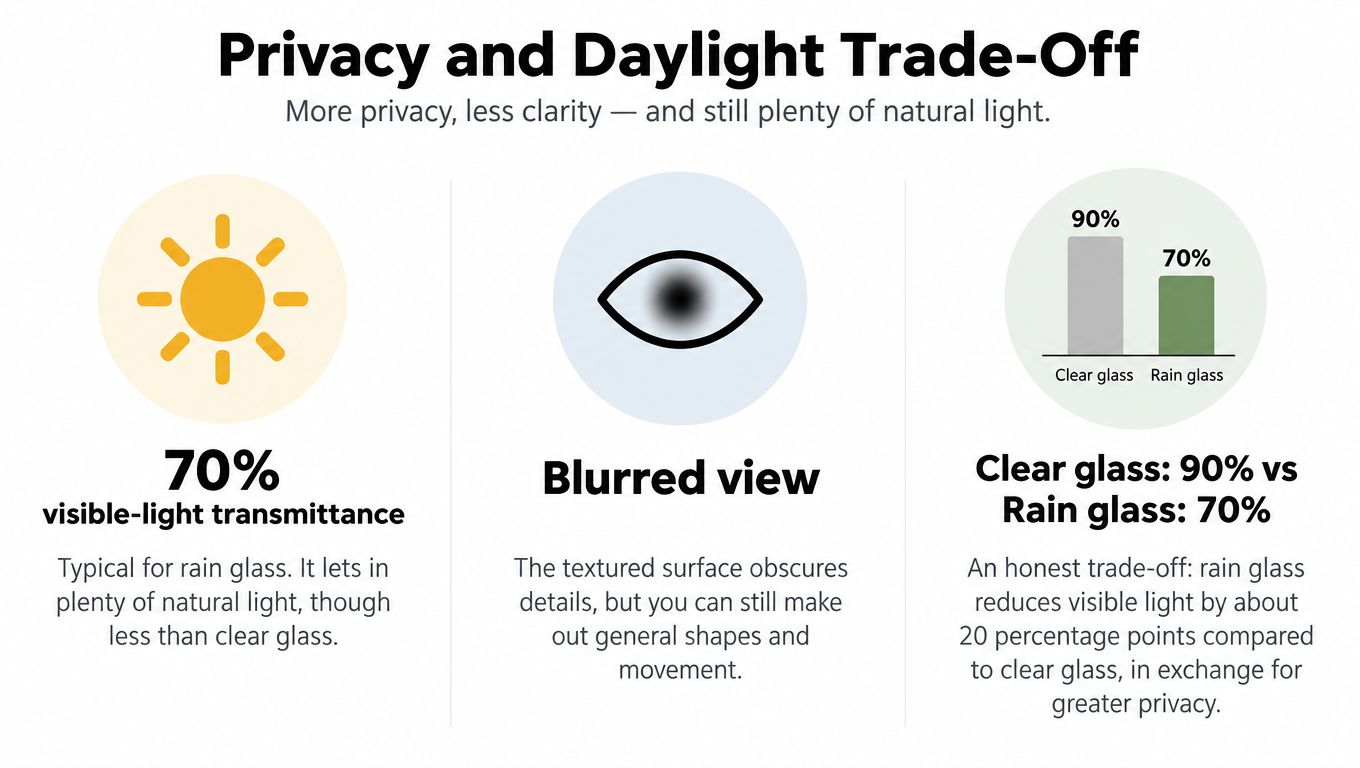
Rain glass is a daylight material. Published technical data for a commercial rain-pattern product reports visible-light transmittance of approximately 85% for 1/4-inch glass and 84% for 3/8-inch glass, with another 1/4-inch configuration at 81%, according to published rain-pattern product data on visible-light transmittance. The manufacturer notes those values vary with orientation, production tolerances, and final application.
Read that plainly. Roughly four-fifths or more of visible light gets through. A room with rain glass stays materially brighter than one behind opaque privacy glazing, and that's the selling point. It also tells you this isn't a blackout material, and it shouldn't be sold as one.
Obscuration isn't the same as concealment
Textured glass obscures fine detail more effectively than it hides movement, silhouettes, or strong contrasts. Faces and small objects blur. A person passing close to the pane, especially backlit, still reads as a moving shape. Industry guidance on decorative glass in daylighting applications treats rolled patterned glass as a light-transmitting privacy option without establishing a universal privacy rating, as set out in glass industry guidance on decorative glass and daylighting.
Privacy shifts with conditions you can test. Distance helps, since a figure several feet from the glass dissolves more than one standing against it. The brighter side matters more, because the observer on the darker side sees more. At night that reverses the daytime result, so an interior light turns occupants into soft silhouettes for anyone outside.
More texture doesn't automatically fix that. Heavier diffusion can cut useful daylight and still leave a nighttime silhouette. If complete visual concealment is the requirement, in a ground-floor bathroom on a public sidewalk for example, rain glass alone is the wrong specification and you'll still need a shade or a different glazing strategy.
Do a day and night test before fabrication. Tape or hold a sample in the opening, stand where occupants will stand, and check it from outside after dark with the room lights on. That ten-minute mock-up is worth more than any brochure claim.
Rain Glass Compared to Frosted, Fluted, and Laminated Privacy Options
Homeowners often ask for rain glass when they mean privacy glass in general. The four common routes behave differently, and picking by room works better than picking by name.
Frosted and acid-etched glass give the most uniform matte obscuration. Detail disappears evenly across the pane, which suits bathrooms and office fronts where consistency matters. The trade-off is a flatter, more clinical look and a surface that can show oils and marks.
Fluted or ribbed glass uses straight, regular ridges. It reads crisp and architectural, distorts views in one direction, and suits interior partitions, cabinet doors, and contemporary entries. It can still telegraph movement along the flutes, so orientation matters just as much as it does with rain.
Laminated privacy glass puts an interlayer between lites. You get obscuration plus the safety and security behavior of laminated construction, with smooth faces on both sides. That helps where cleaning both faces matters, though it adds cost complexity and weight.
Privacy glass options at a glance
| Glass type | Daylight | View softening | Cleaning | Best fit |
|---|---|---|---|---|
| Rain | High | Organic blur, silhouettes remain | Grooves hold dirt on textured face | Entries, sidelights, baths |
| Frosted or acid-etched | Moderate to high | Even matte obscuration | Can show oils, needs gentle care | Baths, offices, partitions |
| Fluted or ribbed | High | Directional distortion | Ridges need attention | Partitions, doors, cabinets |
| Laminated privacy | Varies by interlayer | Consistent, build-up dependent | Smooth faces both sides | Showers, security locations, low glazing |
Film is the other option people raise, usually for existing clear glass they don't want to replace. If you're weighing a retrofit against new glazing, a roundup of the best window film for privacy is a useful starting point for comparing film types. Film can be a sensible interim step, but it's an applied layer, so edges, bubbles, and eventual replacement are part of the deal in a way they aren't with a formed texture.
Match the choice to the room's actual risk. A shower needs obscuration at inches, a sidelight at arm's length, an office partition at conversational distance. Those are different problems wearing the same label.
Glazing, Safety, and Energy Options for Rain Glass
Rain glass describes a face, not a complete glazing specification. You still have to decide thickness, safety treatment, and whether that lite stands alone or sits inside an insulated unit. Those decisions carry code and energy consequences the texture doesn't.
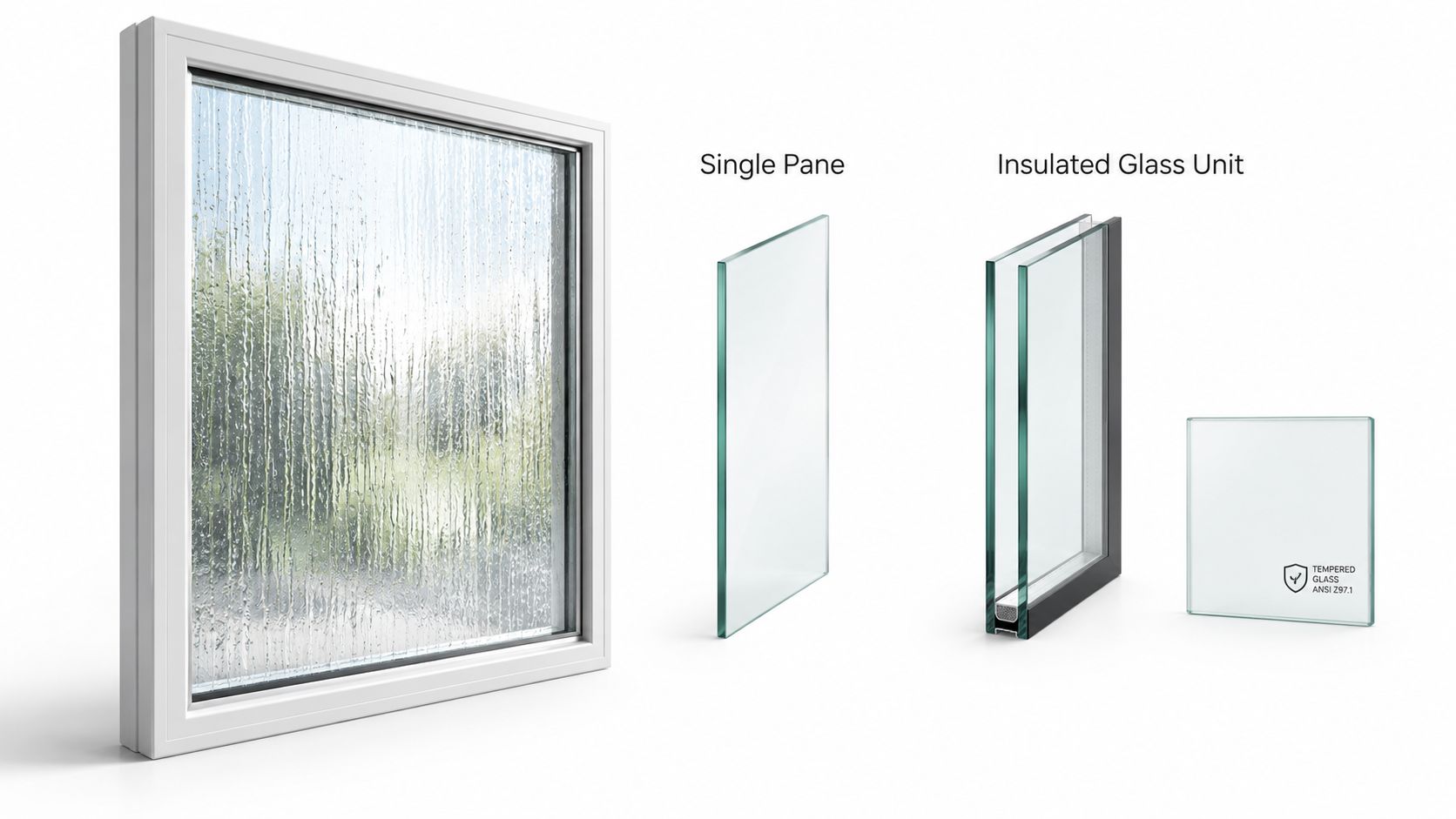
For interior partitions and cabinet doors, a single pane is often enough. For any exterior window or door, expect an insulated glass unit, with the rain lite paired against another lite and a sealed cavity between them. Putting the textured face inside that cavity keeps weather and pollen out of the grooves and leaves smooth surfaces facing the room and the outdoors.
Safety and thermal choices
- Tempered glass: Required in hazardous locations such as doors, sidelights near doors, and glazing near tubs, showers, and floors. Order rain glass tempered for those spots from the start, since it can't be cut after tempering.
- Laminated glass: Adds security and keeps fragments held if the lite breaks. Useful for low glazing, entries, and impact-rated assemblies.
- Low-E coatings and gas fills: A rain lite can pair with a low-E coated lite and an inert gas fill in the cavity, so privacy doesn't have to cost thermal performance.
- Double versus triple glazing: Climate, orientation, and code targets drive this. The comparison in double glazing compared with triple glazing for custom units lays out when the third lite earns its weight and cost.
Thickness interacts with all of this. Thicker lites suit larger panels and shower enclosures, but they add weight that hinges, operators, and slim frames have to carry. Confirm the full build-up, not just the pattern name, against the frame's glazing pocket before fabrication.
The frame's thermal design matters as much as the cavity. A thermally broken steel or aluminum frame reduces heat transfer at the perimeter, where an otherwise good insulated unit can still lose performance and collect condensation. Specify glass and frame as one assembly and the numbers on paper stand a chance of matching the installed wall.
Pairing Rain Glass With Slim Steel and Aluminum Window Systems
A textured lite performs differently depending on how much of it you can see. Slim steel sightlines maximize glass area, so the rain texture does the view control work across a larger, uninterrupted surface. Chunky frames and heavy muntin grids break that surface into small patches, and the pattern reads busier and less calm.
Hot-rolled and thermally broken steel profiles both suit this pairing, for different reasons. The narrow profiles keep divided lites elegant on traditional elevations, while thermally broken assemblies suit exterior doors and large fixed panels in cold or mixed climates. The overview of residential steel windows and their profile options covers how those systems differ in construction and application.
Aluminum systems extend the same idea into harsher exposures. Impact-rated aluminum assemblies bring rain glass into hurricane-zone projects, including Florida and Miami-Dade work, where the laminated build-up and frame testing matter as much as the texture. Black Badge Doors, for example, offers rain glass among the tempered glass options across its steel and aluminum windows and doors, which is typical of how custom manufacturers treat it, as a selectable lite inside a tested system rather than a separate product.
Where coordination saves remakes
Divided lites and muntins need pattern alignment. If the streaks don't run consistently across adjacent panels, the eye catches it immediately. Factory finishes need protection during glazing too, since cleaning compounds and handling marks show on dark steel.
Interior partitions benefit from the same coordination. Bal balanced light on both sides softens silhouettes, and slim steel or aluminum framing keeps a home office or primary suite partition feeling like daylighting, not a wall. Fixed panels can carry larger textured lites than operable sash, so decide operation early.
Rain glass in a custom system is a coordinated specification, not a last-minute substitution. Swap it in late and you inherit weight, pocket depth, and hardware questions nobody priced.
Mock up one full panel at finished size when the order is large or the privacy stakes are high. Small samples hide how the pattern repeats at scale.
Cleaning Rain Glass Without Damaging the Texture or the Frame
Rain glass doesn't clean itself, despite the name. Ordinary rainwater carries what's already on frames, screens, and sills down the pane, then evaporates and leaves mineral deposits and streaks behind. Building maintenance guidance distinguishes that from coated self-cleaning glass, where hydrophilic titanium-dioxide coatings use UV exposure to break down organic deposits and sheet water across the surface, a distinction explained in window cleaning guidance on self-cleaning glass and rainwater residue. Unless your product has a verified coating of that type, don't budget for less maintenance.
The vertical grooves are the maintenance issue. Dust, pollen, salt, and construction residue settle into the texture and make the pane look hazier even when the frame is spotless. Coastal properties, hard-water regions, and large fixed panels with difficult access feel this first.
A workable cleaning routine
- Interior lites: Dust first, then wash with mild detergent and a soft cloth or soft brush that reaches into grooves. Rinse and dry so residue doesn't dry back into the texture.
- Exterior lites: Rinse loose grit before touching the surface, wash gently, and rinse again. Softened or deionized water helps where hard water leaves spots.
- Showers: Squeegee the smooth face after use where possible, and address soap and mineral build-up before it hardens in the grooves.
Skip abrasive pads, powders, and incompatible chemicals. They can damage coatings and seals, and they can mark adjacent factory finishes on steel. The same restraint applies across textured privacy glass generally, and the steps for a safe way to clean frosted windows translate well to rain textures. Clean frames and sills on the same pass, or the next rain will wash that grime straight back onto the glass.
Choose rain glass for diffusion first. Treat upkeep as a site-specific question you answer before ordering, especially for oversized exterior panels you'll need equipment to reach.
A Short Spec Checklist Before You Order Rain Glass Windows
Hand this to your manufacturer before fabrication, not after. Each item closes a decision that can't be reversed once the unit is sealed, tempered, or finished.
- Pattern and sample: Confirm the exact product, pattern depth, and vertical direction from a physical sample.
- Textured face orientation: State which surface carries the texture and where it sits in the build-up, room side, cavity, or exterior.
- Day and night mock-up: Test the sample in the opening in daylight and after dark with interior lights on.
- Glazing build-up: Specify single pane or insulated unit, thickness, tempered or laminated construction, low-E coating, and gas fill.
- Frame compatibility: Confirm glazing pocket depth, weight limits, and thermal break requirements for the steel or aluminum system.
- Finish coordination: Align frame color and sheen, muntin layout, and hardware so the pattern runs consistently across panels.
- Maintenance plan: Note exposure, coastal or hard-water conditions, and access for cleaning large or high panels.
Most of these items are standard conversation on fully custom-made windows and doors built to order, where glass, frame, and finish are specified together. If a supplier can't answer orientation and build-up questions clearly, that tells you something about the order you're about to place.
If you're specifying rain glass windows for an entry, bathroom, or interior partition, Black Badge Doors builds custom steel and aluminum windows and doors to order with rain, fluted, frosted, tempered, and laminated glass options inside thermally broken, slim-sightline systems. Bring your opening sizes, a note on which way the light falls, and your day and night privacy expectations, and the team can help you lock down orientation, glazing build-up, and finish before fabrication starts.
Read more
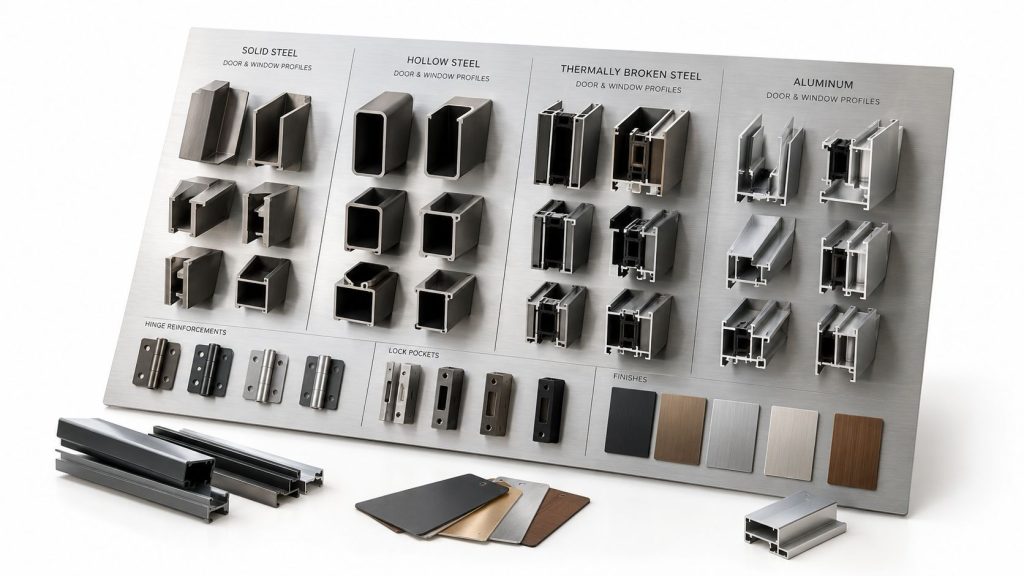
Stiles Custom Metal Doors and Windows: A Complete Reference
You're reviewing a custom opening submittal, and the elevation looks right. Then the section detail arrives: the meeting stiles are wider than expected, the lock preparation doesn't match the hardware schedule, and nobody has identified...
Read more
Custom Dimensions for Steel Windows: How to Measure Right
You're ready to approve the steel windows. The elevations look right, the sightlines are settled, and the contractor has sent over opening sizes. Before those numbers become fabrication instructions, there's a question worth asking: did...
Read more